/dev/world 2026
27-28 AUGUST • NAARM | MELBOURNE
THURSDAY 27 AUG 2026
10:00am G.01/02
WELCOME AND HOUSEKEEPING
10:15am - Special PresentationG.01/02
DO YOU KNOW THE WAY OUT OF SAN JOSE? THE JOURNEY THROUGH BIG TECH AND BACK AGAIN
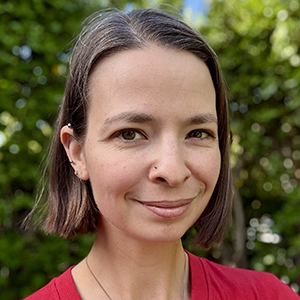
Judit Klein
 What does it take not just to break into Silicon Valley, but to survive its pressures, curveballs, and quirks—and know when to leave before it breaks you?
Drawing from a 10-year stint navigating the San Francisco Bay Area tech landscape, Judit will explore the realities of chasing big dreams: from visa hurdles and tech interview torture chambers, to losing and finding your identity inside a giant corporation. But this isn't just a tech story. Even if you don’t have Silicon Valley aspirations, Judit offers a roadmap for charting non-traditional career paths, adapting when the industry shifts, and recognising when it’s time to redefine success. You will walk away with practical insights on how to make waves as a small fish and, ultimately, how to scale your own mountains on your own terms.
What does it take not just to break into Silicon Valley, but to survive its pressures, curveballs, and quirks—and know when to leave before it breaks you?
Drawing from a 10-year stint navigating the San Francisco Bay Area tech landscape, Judit will explore the realities of chasing big dreams: from visa hurdles and tech interview torture chambers, to losing and finding your identity inside a giant corporation. But this isn't just a tech story. Even if you don’t have Silicon Valley aspirations, Judit offers a roadmap for charting non-traditional career paths, adapting when the industry shifts, and recognising when it’s time to redefine success. You will walk away with practical insights on how to make waves as a small fish and, ultimately, how to scale your own mountains on your own terms.
About the presenter
Judit is a Kiwi recently returned to New Zealand after living in Silicon Valley for 10 years. She first attended /dev/world in 2010 having written little more than her first Hello World app. She’s worked in education technology, iOS development, and after a 7 year stint at Apple is now in search of what comes next.
11:00am G.01/02
FROM MONO TO SPATIAL - AND ALL THE EARS IN BETWEEN
Daniel Woo, UXED Pty Limited
 Ten things you can do to bring sound to your apps
Audio is often the lesser cousin of vision in app development. We spend enormous effort on layout, typography, animation and pixels, then add sound near the end with a call to play().
This talk presents ten practical ways developers can bring sound, speech and auditory interaction into apps on Apple platforms. Each idea begins with a small piece of Swift, then explores the larger design question hidden behind that code.
We will look at how to (this may vary slightly):
1. Play a sound.
2. Speak text using synthesised speech.
3. Expose app capabilities through App Intents so they can be reached through spoken commands.
4. Accept system dictation in ordinary text interfaces.
5. Transcribe live or recorded speech.
6. Attach sound to an object in space.
7. Choose between mono, stereo, ambient, channel-based and spatial sound.
8. Give virtual environments their own acoustic character.
9. Pair sound with haptic feedback.
10. Describe auditory interfaces meaningfully for VoiceOver and other assistive technologies.
The progression runs from a simple playback call through to speech, spatial computing, haptics and accessibility. Along the way, we will distinguish dictation, transcription and spoken commands; explore the role of App Intents as the semantic layer between an app and the system; and consider users listening through device speakers, headphones, one earbud, hearing aids, noisy classrooms, public spaces - or with sound turned off entirely.
The aim is not to turn every developer into an audio engineer. It is to provide a useful set of starting points, implementation patterns and perceptual questions that can improve an app immediately.
It may take one line of code to add sound. It takes design to make it communication.
Ten things you can do to bring sound to your apps
Audio is often the lesser cousin of vision in app development. We spend enormous effort on layout, typography, animation and pixels, then add sound near the end with a call to play().
This talk presents ten practical ways developers can bring sound, speech and auditory interaction into apps on Apple platforms. Each idea begins with a small piece of Swift, then explores the larger design question hidden behind that code.
We will look at how to (this may vary slightly):
1. Play a sound.
2. Speak text using synthesised speech.
3. Expose app capabilities through App Intents so they can be reached through spoken commands.
4. Accept system dictation in ordinary text interfaces.
5. Transcribe live or recorded speech.
6. Attach sound to an object in space.
7. Choose between mono, stereo, ambient, channel-based and spatial sound.
8. Give virtual environments their own acoustic character.
9. Pair sound with haptic feedback.
10. Describe auditory interfaces meaningfully for VoiceOver and other assistive technologies.
The progression runs from a simple playback call through to speech, spatial computing, haptics and accessibility. Along the way, we will distinguish dictation, transcription and spoken commands; explore the role of App Intents as the semantic layer between an app and the system; and consider users listening through device speakers, headphones, one earbud, hearing aids, noisy classrooms, public spaces - or with sound turned off entirely.
The aim is not to turn every developer into an audio engineer. It is to provide a useful set of starting points, implementation patterns and perceptual questions that can improve an app immediately.
It may take one line of code to add sound. It takes design to make it communication.
About the presenter
Daniel Woo, PhD is a UX designer, software and electrical engineer, photographer and musician. He was recognised as an Apple Distinguished Educator in 2011. Between 2000 and 2012 at UNSW, Daniel established the Human Computer Interaction (HCI) Laboratory, created and taught the COMP4511 Interaction Design course, led commercial usability consulting projects, principal investigator on two Australian Research Council (ARC) grants and taught Cocoa programming through the AUC. His background includes hearing research, geolocation systems and interaction design, experiences that continue to influence his work in accessibility, audio, spatial computing and Apple platform development. Daniel enjoys encouraging educators, students and developers to explore new technologies and build software that makes a difference.
11:00am G.03
WHAT THE F**K IS KUBERNETES, AND WHY SHOULD I CARE?
Josh Deprez
 Kubernetes has been around since 2015: over a decade now. It's easy to forget that the average person only knows about Containers, Pods, Deployments, Services, Ingresses, writing YAML manifests, and PVCs. Oh, and CRDs. (Right?)
Clearly not. Those terms may mean nothing to you. For most of the last decade, they meant nothing to me. Please be assured that not knowing these terms is, in fact, totally normal and cool! But this talk is not a term-explainer, nor is it merely an introduction to Kubernetes.
I argue that Kubernetes is a _language_ that provides a unified way to describe containerised apps and their dependencies, independent of where (what cloud, hosting provider, or physical machine) they are run. In this framing, I will demonstrate some practical uses for Kubernetes in my home lab made out of small commodity machines.
These practical demonstrations would be straightforward without Kubernetes, and they are not made any more efficient or secure by adopting Kubernetes. But that's actually the point: a key value of Kubernetes is actually in the language for describing how they work, which makes them easier to talk about, share, inspect, and maintain over time - once you know enough of the language.
Kubernetes has been around since 2015: over a decade now. It's easy to forget that the average person only knows about Containers, Pods, Deployments, Services, Ingresses, writing YAML manifests, and PVCs. Oh, and CRDs. (Right?)
Clearly not. Those terms may mean nothing to you. For most of the last decade, they meant nothing to me. Please be assured that not knowing these terms is, in fact, totally normal and cool! But this talk is not a term-explainer, nor is it merely an introduction to Kubernetes.
I argue that Kubernetes is a _language_ that provides a unified way to describe containerised apps and their dependencies, independent of where (what cloud, hosting provider, or physical machine) they are run. In this framing, I will demonstrate some practical uses for Kubernetes in my home lab made out of small commodity machines.
These practical demonstrations would be straightforward without Kubernetes, and they are not made any more efficient or secure by adopting Kubernetes. But that's actually the point: a key value of Kubernetes is actually in the language for describing how they work, which makes them easier to talk about, share, inspect, and maintain over time - once you know enough of the language.
About the presenter
Josh is a software developer, mathematician, and cat parent living in lutruwita / Tasmania. They have worked for such companies as Google and Buildkite. But don't let any of that fool you. Their current hobbies include recreational Kubernetes sysadmin, after all. At this point, Josh may as well be part of the /dev/world furniture, but please do not sit upon Josh without their permission.
11:40am G.01/02
LOOKING FOR TROUBLE
Chris Kolbu
 For developers, writing code is near-synonymous with writing bugs. So we write tests. Some of us write them before the "real" code; others after. Few of us write enough.
Your unit tests check the inputs and combinations you thought of in the moment. The bugs that ship are the ones that you didn’t, and the real tricky ones can lurk in a dark corner for years, escaping notice.
Testing is a search problem. A bug hunt. But few of us treat it that way, testing boundary conditions and unlikely combinations as a matter of course.
What if you could do that systematically?
I’ve spent the last year finding out, creating a Swift testing library combining the most effective search strategies into sweeps covering stateless and stateful code.
Join me as we go hunting for bugs in production code.
For developers, writing code is near-synonymous with writing bugs. So we write tests. Some of us write them before the "real" code; others after. Few of us write enough.
Your unit tests check the inputs and combinations you thought of in the moment. The bugs that ship are the ones that you didn’t, and the real tricky ones can lurk in a dark corner for years, escaping notice.
Testing is a search problem. A bug hunt. But few of us treat it that way, testing boundary conditions and unlikely combinations as a matter of course.
What if you could do that systematically?
I’ve spent the last year finding out, creating a Swift testing library combining the most effective search strategies into sweeps covering stateless and stateful code.
Join me as we go hunting for bugs in production code.
About the presenter
Chris Kolbu is a lead iOS/macOS developer who has been working in this space for over a decade. He cares deeply about accessibility, user and developer experience, software testing, and performance. He (still) does not care for Christmas being in summer, but is getting used to it.
11:40am G.03
TEACHING APPLE APP DEVELOPMENT IN THE AGE OF AI CODING
Harry Ng, Build with Harry
 AI coding tools are becoming part of how students, indie developers, and professional engineers learn to build software. For Apple-platform education, this creates both an opportunity and a challenge. Learners can now generate working SwiftUI code much earlier, but they may also skip the fundamentals that help them understand architecture, debugging, design, and maintainability. This talk looks at how educators and mentors can teach iOS development when AI coding tools are readily available. Instead of banning AI or letting it do everything, we can design a human-in-the-loop learning process: learners define intent, break features into smaller tasks, ask AI for help, review the output, explain the code, test the app, and improve the user experience. Attendees will leave with teaching patterns, classroom exercises, and review questions that help learners use AI responsibly while still developing real Apple-platform skills.
About the presenter
Harry Ng is an iOS developer, consultant, and teacher with around 20 years of software development experience, including more than a decade building apps for Apple platforms. He previously co-founded Sorted, a productivity app used by millions of people across Apple devices, and has taught SwiftUI and iOS app development at universities and community events. Harry focuses on AI-assisted app development, SwiftUI, product design, and helping developers build better apps with thoughtful workflows.
12:20pm
LUNCH
1:20pm G.01/02
FROM APPLE CLASSROOM TO INDUSTRY IMPACT: A STUDENT SHOWCASE ON APPLE PLATFORM DEVELOPMENT
Michael Cowling, RMIT University
Our university has built one of the strongest Apple-focused education ecosystems in Australia, spanning foundation programs through to generalist undergraduate study and specific computer science deep dives innovating in Apple platforms. This session hands the stage to the students themselves. In a fast-paced showcase format, four to six students from across these programs will each present a live, five-minute snapshot of a project built on Apple platforms — from apps solving real-world problems to research prototypes exploring new interaction models. Attendees will leave with a clear picture of what's possible when Apple platform skills are embedded across a university curriculum, concrete examples of student-led innovation they can reference or borrow ideas from, and a sense of the pipeline of graduates entering the Apple developer ecosystem. This session suits educators designing or benchmarking Apple-focused curricula, developers who want to see what today's emerging talent is capable of and are looking for opportunities to connect on capstone and research projects, and anyone else who wants inspiration from what students can build when given the platform, the mentorship, and the room to experiment!
About the presenter
Professor Michael Cowling is Professor of Educational Technology and Director of the Hub for Apple Platform Innovation (HAPI) at RMIT University, and one of Australia's most recognised voices in educational technology. A national teaching fellow and recipient of the 2020 Universities Australia Award for Teaching Excellence in Physical Sciences, his research spans Artificial Intelligence, Technology Enhanced Learning, and Extended Reality, with 125+ publications and 3,800+ citations on Google Scholar. His opinion pieces have been republished across 100+ outlets, reaching over 1.3 million readers through The Conversation alone. Under his leadership, HAPI supports students across RMIT's Apple-focused programs, with graduates going on to build careers as developers and technologists across Australia's tech industry. A two-term President of ASCILITE, Michael's guiding mantra is ‘pedagogy before technology’. Professor Cowling will be joined by four to six students drawn from across the university's Apple-focused programs, spanning foundation studies, generalist undergraduate degrees, and specialist computer science majors. Each presenter will speak to a project of their own making, offering a first-hand account of what it's like to learn and build on Apple platforms as a student today.
2:00pm G.01/02
WWDC 2026 WINNER — BUILDING FOR USERS WHO CAN'T READ AN ERROR MESSAGE
Martina Recabarren, Apple WWDC Student 2026- DevWorld Sydney
 Calm Corner is a Swift Student Challenge 2026 winning app — an emotional self-regulation tool for primary school children. What does it actually take to build an app that a five-year-old can use alone, in a moment of emotional distress? This is what this WWDC winning app does.
This session covers the real technical decisions: MapKit, Foundation Models, and SwiftUI, all in service of a user who can't read an error message.
The talk also explores the hardest design constraint of all: knowing what to leave out.
Calm Corner is a Swift Student Challenge 2026 winning app — an emotional self-regulation tool for primary school children. What does it actually take to build an app that a five-year-old can use alone, in a moment of emotional distress? This is what this WWDC winning app does.
This session covers the real technical decisions: MapKit, Foundation Models, and SwiftUI, all in service of a user who can't read an error message.
The talk also explores the hardest design constraint of all: knowing what to leave out.
About the presenter
Martina is a Swift Student Challenge 2026 winner — the only female winner in Australia and New Zealand. She also won the Premier's Coding Competition. In 2026 Martina has presented at EduTECH, Future Skills Apple Brisbane, and /dev/world Sydney. She builds on Apple platforms because the frameworks let her solve problems she actually sees in the world around her.
2:20pm G.01/02
ARKIT: BEYOND THE TABLETOP
Toby Duffy
 ARKit's sample code, defaults, and documentation all quietly assume the same scene: a small object, at arm's length, on a table in front of you. Apple's own reference focus square even scales itself for "about a metre from a surface." But a lot of the interesting work happens at the other end of that scale. What happens when you take AR out into the big wide world: when the 3D model is the size of a stadium, the tabletop is a film set, and the people using it are visual effects crews who need the result to be accurate?
This talk takes the tabletop assumption apart one layer at a time; placing building-sized models without trapping the viewer inside them, adding flexibilty for models you can't pre-compile, recording an AR session with anything other than ReplayKit, and anchoring a large scene to a real location reliably.
Attendees will come away knowing some pitfalls of scaling an AR app and the real-world issues that tutorials don't cover. Real production code, real lessons learned, real years off my life.
ARKit's sample code, defaults, and documentation all quietly assume the same scene: a small object, at arm's length, on a table in front of you. Apple's own reference focus square even scales itself for "about a metre from a surface." But a lot of the interesting work happens at the other end of that scale. What happens when you take AR out into the big wide world: when the 3D model is the size of a stadium, the tabletop is a film set, and the people using it are visual effects crews who need the result to be accurate?
This talk takes the tabletop assumption apart one layer at a time; placing building-sized models without trapping the viewer inside them, adding flexibilty for models you can't pre-compile, recording an AR session with anything other than ReplayKit, and anchoring a large scene to a real location reliably.
Attendees will come away knowing some pitfalls of scaling an AR app and the real-world issues that tutorials don't cover. Real production code, real lessons learned, real years off my life.
About the presenter
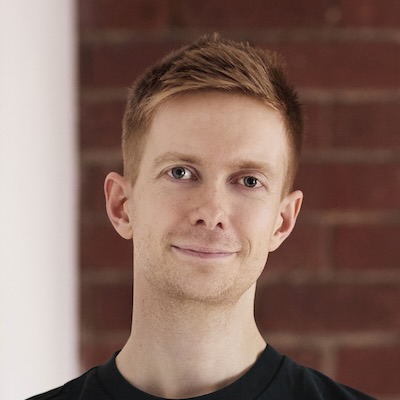
Toby Duffy is an independent iOS developer and the creator of PreviewAR, a film and TV pre-visualisation app that lets crews place 3D assets in AR, frame shots through virtual cinema cameras, and record data on set. It has been used on productions including The Last of Us (HBO), Wicked: Parts 1 & 2 (Universal), Foundation (Apple TV+), and Jurassic World (Universal). He has maintained the codebase through nine years of successive platform shifts: ARKit 1 to 6, Swift 3 to 6, the arrival of SwiftUI, and the deprecation of SceneKit.
3:00pm
AFTERNOON TEA
3:30pm G.01/02
A PREVIEW OF MCP
Amy Delves
 With recent versions of Xcode, Apple introduced the ability for Agents to talk to and control Xcode via Model Context Protocol (MCP). This opened up the ability for controling aspects of Xcode by other apps that talk MCP. One of these capabilities is the ability to generate SwiftUI previews and render them to an output file.
The talk will look at the process of building a mac app that talks MCP to Xcode and using it to fetch SwiftUI Previews that belong to a project. As well as covering just what MCP is and how it gets exposed by Xcode there will be segues into areas such as XPC for reliable communication and how to structure an app so that it remains elegible for distribution on the mac app store.
With recent versions of Xcode, Apple introduced the ability for Agents to talk to and control Xcode via Model Context Protocol (MCP). This opened up the ability for controling aspects of Xcode by other apps that talk MCP. One of these capabilities is the ability to generate SwiftUI previews and render them to an output file.
The talk will look at the process of building a mac app that talks MCP to Xcode and using it to fetch SwiftUI Previews that belong to a project. As well as covering just what MCP is and how it gets exposed by Xcode there will be segues into areas such as XPC for reliable communication and how to structure an app so that it remains elegible for distribution on the mac app store.
About the presenter
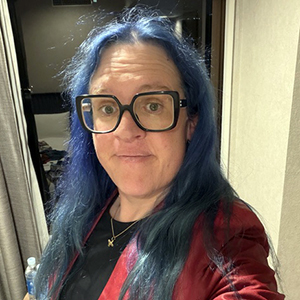
Often known for her ramblings about all things HealthKit and Foundation Models, Amy is also well versed in low level communication and how making apps which talk to others improves her life as an indie developer. When not writing apps, Amy can often be found cycling or travelling the world. She loves to meet new people and talk about what she is building.
3:30pm G.03
FROM UNITY TO REALITYKIT: BUILDING A VISIONOS VIRTUAL SHOWROOM
Declan Dwyer, Graviton Interactive
 Apple Vision Pro introduced a new way to build spatial applications, but it also raised an important question for many developers: should you continue using Unity, or move to native visionOS development?
This session follows the journey of exploring a virtual showroom for architectural products as a way to understand the strengths and trade-offs of both approaches. Using that project as a case study, we'll compare Unity and RealityKit, discuss the architectural differences between the two platforms, and explore how SwiftUI and RealityKit work together to create intuitive spatial experiences.
Along the way, we'll cover 3D asset workflows, rendering high-quality models, spatial UI patterns, and lessons learned while transitioning to native development. The session will also include updated examples from more recent visionOS projects, highlighting how development practices and the platform have evolved since the original prototype.
Whether you're starting a new visionOS project or deciding if it's time to move away from Unity, you'll leave with practical insights into building modern, native spatial applications with RealityKit.
Apple Vision Pro introduced a new way to build spatial applications, but it also raised an important question for many developers: should you continue using Unity, or move to native visionOS development?
This session follows the journey of exploring a virtual showroom for architectural products as a way to understand the strengths and trade-offs of both approaches. Using that project as a case study, we'll compare Unity and RealityKit, discuss the architectural differences between the two platforms, and explore how SwiftUI and RealityKit work together to create intuitive spatial experiences.
Along the way, we'll cover 3D asset workflows, rendering high-quality models, spatial UI patterns, and lessons learned while transitioning to native development. The session will also include updated examples from more recent visionOS projects, highlighting how development practices and the platform have evolved since the original prototype.
Whether you're starting a new visionOS project or deciding if it's time to move away from Unity, you'll leave with practical insights into building modern, native spatial applications with RealityKit.
About the presenter
Declan Dwyer is the Founder and Managing Director of Graviton Interactive, a Sydney-based spatial computing studio. He develops native visionOS and AR applications, helping organisations use spatial computing for product visualisation, cognitive training, and construction workflows. His interests include RealityKit, SwiftUI, and building practical spatial experiences that move beyond technology demonstrations.
4:10pm G.01/02
DON'T PANIC: A HITCHHIKER'S GUIDE TO GITTING SHIP DONE
Nic Wittison
 Depending on who you ask, AI coding is either all slop, or the reason you'll never have to read a pull request again. A year of shipping with AI has convinced me both camps are wrong, and honestly, that's a relief.
The actual trick is matching the process to the stakes. Vibe coding is genuinely great - for finding out before lunch that your idea was bad. Past that you need better moves: metaprompting, where the AI has to write the brief before it's allowed anywhere near the code; spec handoffs, so your requirements survive first contact with an enthusiastic agent; and for anything that has to face production, workflows like GSD that insist on plans, checkpoints, and commits a human can actually review.
None of this is theoretical. I'll show a conference app the robots built in a few days, mostly to prove they could, and a production web product that started out lovingly hand-coded and has since been handed over to the machines one nervous pull request at a time - including the handovers that went badly. Through it all, one skill matters more than anything else: knowing when to stop prompting and go read the code.
Don't panic. Bring a towel.
Depending on who you ask, AI coding is either all slop, or the reason you'll never have to read a pull request again. A year of shipping with AI has convinced me both camps are wrong, and honestly, that's a relief.
The actual trick is matching the process to the stakes. Vibe coding is genuinely great - for finding out before lunch that your idea was bad. Past that you need better moves: metaprompting, where the AI has to write the brief before it's allowed anywhere near the code; spec handoffs, so your requirements survive first contact with an enthusiastic agent; and for anything that has to face production, workflows like GSD that insist on plans, checkpoints, and commits a human can actually review.
None of this is theoretical. I'll show a conference app the robots built in a few days, mostly to prove they could, and a production web product that started out lovingly hand-coded and has since been handed over to the machines one nervous pull request at a time - including the handovers that went badly. Through it all, one skill matters more than anything else: knowing when to stop prompting and go read the code.
Don't panic. Bring a towel.
About the presenter
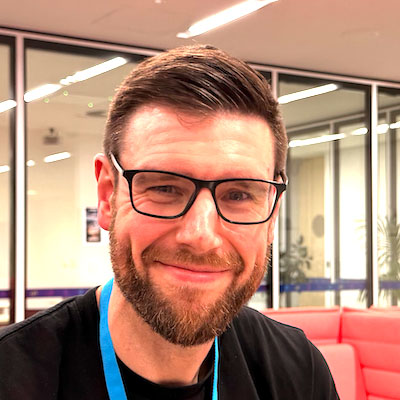
Nic Wittison spent ten years at Canva, helping build its iOS apps before leading engineering for the editor as a Senior Director - a job they jumped ship from the moment GPT-3.5 landed, to work on integrating AI across Canva in the very early days of the latest wave of AI. Since leaving in 2024, they've been back on the tools at a proptech startup, shipping production web code through agentic AI workflows and learning, sometimes the hard way, how to move fast while still having confidence in what actually ships. When not arguing with a language model about whether the build really succeeded, Nic plays video games and issues carefully-worded prompts to two small boys, aged four and two, with a similar success rate.
5:00pm
DRINKS
6:00pm
DINNER AND QUIZ
Let the games begin!!!
FRIDAY 28 AUG 2026
10:15am - Special PresentationG.01/02
BREATHE
Daniel Steinberg
 A Meditation on Zen and the Art of Software Development. Most of the time spent programming is time spent failing. As soon as we succeed, we move on the the next bug, challenge, feature,… And if we back up a moment, how much of our time spent programming is spent programming. What is it we should focus on and how can we be there for each other?
About the presenter
Daniel is the author of more than a dozen books including the best selling books The Curious Case of the Async Cafe, A SwiftUI Kickstart, A Swift Kickstart, A Bread Baking Kickstart, and Dear Elena. Daniel presents iOS, SwiftUI, and Swift training and consults through his company Dim Sum Thinking. He has written apps for the iPhone and the iPad since the SDKs first appeared and has written programs for the Mac all the way back to System 7. When he’s not coding or talking about coding for the Mac, the iPhone, and the iPad he’s probably cooking, baking bread, or hanging out with friends.
11:00am G.01/02
WHAT DO DEVELOPERS NEED TO KNOW ABOUT AI ATTACKS, SECURING AI AND CODING AGENTS
Louis Cremen, Lumify Work
 AI is an amazing tool for developers - but also - it's an amazing tool for attackers.
Your coding agent reads files it's told to trust, runs commands on your behalf and touches your credentials, cloud and potentially production systems. If you YOLO this, a coding agent can be talked into misbehaving, working for the attacker instead of you.
The goal of this talk is to see how developers are being targeted in the age of AI. What has already gone wrong in the real world - what the attackers are doing against developers - and how can we help mitigate against these risks.
AI is an amazing tool for developers - but also - it's an amazing tool for attackers.
Your coding agent reads files it's told to trust, runs commands on your behalf and touches your credentials, cloud and potentially production systems. If you YOLO this, a coding agent can be talked into misbehaving, working for the attacker instead of you.
The goal of this talk is to see how developers are being targeted in the age of AI. What has already gone wrong in the real world - what the attackers are doing against developers - and how can we help mitigate against these risks.
About the presenter
Louis is one of two /dev/eryworlders that has been to every /dev/world. He's known by people as the Brain Dev Sec guy as his interests are Neuroscience, Coding and Information Security. He's currently the lead cyber instructor at Lumify Work, Cyber Training Business of the Year 2025 and 2026 (CyberDaily) and he teaches most of the well-known security certifications to companies all over Australia and New Zealand.
11:00am G.03
SWIFT OUTSIDE OF THE APPLE ECOSYSTEM
Sushant Verma
 For many developers, Swift is synonymous with iPhone, iPad, and Mac development. But over the past few years, Swift has quietly evolved into a powerful general-purpose language capable of running far beyond Apple’s ecosystem.
In this session, we’ll explore the current state of Swift outside of Apple platforms, including Android, Linux, WebAssembly, embedded devices, and server-side development. We’ll look at the official Swift SDK for Android, cross-platform frameworks such as Skip, and how Swift is increasingly being used to share code across mobile, backend, and cloud environments.
Whether you’re an iOS engineer curious about expanding your reach or a developer interested in modern cross-platform technologies, this talk will provide a realistic look at what Swift can do in 2026.
For many developers, Swift is synonymous with iPhone, iPad, and Mac development. But over the past few years, Swift has quietly evolved into a powerful general-purpose language capable of running far beyond Apple’s ecosystem.
In this session, we’ll explore the current state of Swift outside of Apple platforms, including Android, Linux, WebAssembly, embedded devices, and server-side development. We’ll look at the official Swift SDK for Android, cross-platform frameworks such as Skip, and how Swift is increasingly being used to share code across mobile, backend, and cloud environments.
Whether you’re an iOS engineer curious about expanding your reach or a developer interested in modern cross-platform technologies, this talk will provide a realistic look at what Swift can do in 2026.
About the presenter
Sushant Verma is a software engineer with over 10 years of experience building applications within the Apple ecosystem. He’s passionate about developer tooling, cross-platform development, and loves to nerd out building apps for his own utility. A regular experimenter with emerging technologies, Sushant enjoys building everything from mobile apps and embedded projects to home automation systems and developer libraries. He loves sharing practical insights that help developers write better software, discover new tools, and get more out of Swift.
11:40am G.01/02
APPLE PLATFORM ARCHITECT
Ace Authors, RMIT University
 Local AI inference on Apple Silicon is fast. Two Mac Studios running together are faster - and this session shows you exactly how to make that happen.
This talk walks through building a real, working distributed inference cluster using Apple's MLX framework, then connecting it to a Swift agentic app with full tool-calling support. Attendees will see a live two-node cluster (ring-backend over Ethernet, no Thunderbolt required) serving a sharded large language model via mlx_lm.server's OpenAI-compatible endpoint - and a Swift client hitting that endpoint with the same tool-calling patterns they'd use against Apple's on-device SystemLanguageModel.
The central lesson: once your cluster is running, your Swift app doesn't need to change. The distribution lives in the server layer; your application code stays clean, portable, and ready to swap backends.
Attendees will leave knowing how to configure a multi-node MLX hostfile, launch distributed inference with mlx.launch, and wire up tool-calling agents in Swift against a locally hosted cluster — no cloud account, no API costs, no data leaving the room.
Local AI inference on Apple Silicon is fast. Two Mac Studios running together are faster - and this session shows you exactly how to make that happen.
This talk walks through building a real, working distributed inference cluster using Apple's MLX framework, then connecting it to a Swift agentic app with full tool-calling support. Attendees will see a live two-node cluster (ring-backend over Ethernet, no Thunderbolt required) serving a sharded large language model via mlx_lm.server's OpenAI-compatible endpoint - and a Swift client hitting that endpoint with the same tool-calling patterns they'd use against Apple's on-device SystemLanguageModel.
The central lesson: once your cluster is running, your Swift app doesn't need to change. The distribution lives in the server layer; your application code stays clean, portable, and ready to swap backends.
Attendees will leave knowing how to configure a multi-node MLX hostfile, launch distributed inference with mlx.launch, and wire up tool-calling agents in Swift against a locally hosted cluster — no cloud account, no API costs, no data leaving the room.
About the presenter
Ace Authors is a Melbourne-based iOS/macOS developer with 10+ years building software for NAB, ANZ, ME Bank, Officeworks, and Coles Myer. He holds a Computer Science degree from QUT and a Master's from the Asian Institute of Technology. As Apple Platform Architect at RMIT University, Ace explores emerging Apple platform technologies and helps architect research initiatives.
11:40am G.03
BUILDING APPS YOUR BACKEND TEAM WILL LOVE
Sam Jarman
 Every mobile app dev eventually asks themselves: Do I need a backend?
Sometimes the answer is “not yet”. Modern Apple platforms offer an few options, from local persistence and CloudKit through to third-party services like Firebase and Supabase, before you ever need to talk to your own server.
But when you do cross that line, your app becomes part of a distributed system. Suddenly, every network request affects battery life, infrastructure cost, reliability, scalability, and the engineers responsible for keeping your backend running.
In this talk, we’ll explore how to build mobile apps that backend teams genuinely enjoy supporting. We’ll cover when to avoid a backend altogether, choosing the right architecture, designing resilient API clients, caching, authentication, retries, environment management, and the small engineering decisions that have an great impact on both teams.
Whether you’re building your first networked app or your fiftieth, you’ll leave with practical techniques and a new mental model for building apps your backend team will love.
Every mobile app dev eventually asks themselves: Do I need a backend?
Sometimes the answer is “not yet”. Modern Apple platforms offer an few options, from local persistence and CloudKit through to third-party services like Firebase and Supabase, before you ever need to talk to your own server.
But when you do cross that line, your app becomes part of a distributed system. Suddenly, every network request affects battery life, infrastructure cost, reliability, scalability, and the engineers responsible for keeping your backend running.
In this talk, we’ll explore how to build mobile apps that backend teams genuinely enjoy supporting. We’ll cover when to avoid a backend altogether, choosing the right architecture, designing resilient API clients, caching, authentication, retries, environment management, and the small engineering decisions that have an great impact on both teams.
Whether you’re building your first networked app or your fiftieth, you’ll leave with practical techniques and a new mental model for building apps your backend team will love.
About the presenter
Sam Jarman is a Kiwi engineering manager based in Sydney, Australia, with over 15 years of experience in software development. His background includes development and leadership roles in iOS, frontend, backend across startups, agencies, small businesses, and medtech. Sam currently leads a team of engineers at Cochlear, where he focuses on helping the team work efficiently and grow their skills.
12:20pm
LUNCH
1:20pm G.01/02
STUDENT SEGMENT: DAVID MAZZEO
David Mazzeo
 In my talk, I'll share my journey of building Shuttle - a next-generation public transport app for Apple platforms. You'll hear about my development process, from how I turned it from a small idea I had after Live Activities were announced, to a 9-month TestFlight period where I worked closely with the community, through today where it's achieved 1.6K+ paid downloads and frequently hovers in the top 3 paid travel apps on the Store.
Along the way, you'll also hear a bit about my time developing on Apple platforms as a whole, such as how my skills have developed, and what it's like integrating bleeding-edge features in between a Dub Dub and a major OS launch (like I did with Foundation Models and Liquid Glass in Shuttle).
In my talk, I'll share my journey of building Shuttle - a next-generation public transport app for Apple platforms. You'll hear about my development process, from how I turned it from a small idea I had after Live Activities were announced, to a 9-month TestFlight period where I worked closely with the community, through today where it's achieved 1.6K+ paid downloads and frequently hovers in the top 3 paid travel apps on the Store.
Along the way, you'll also hear a bit about my time developing on Apple platforms as a whole, such as how my skills have developed, and what it's like integrating bleeding-edge features in between a Dub Dub and a major OS launch (like I did with Foundation Models and Liquid Glass in Shuttle).
About the presenter
David is a 17-year-old app developer with 9 years of experience coding on Apple platforms. He released his first app onto the Store at 12 years old, and built up his skills from there to have since won the Swift Student Challenge twice, and released another 14 apps. His main project right now is Shuttle, a new public transport app for Melbourne that frequently charts in the top paid travel apps on the Store.
1:40pm G.01/02
STUDENT SEGMENT - AI/ML X DIGITAL HEALTH MASHUP! SOME RMIT STUDENT CASE STUDIES
RMIT Students
Embera: Forecasting Hot Flushes Before They Strike Perimenopause affects an estimated 3.28 million Australian women, with three in four experiencing hot flushes, yet almost every existing health app is built for logging what has already happened, not for anticipating what's coming next. Embera flips that model. Built during RMIT's Apple Foundation Program, Embera is a hot flush companion app that combines HealthKit, WeatherKit, and calendar data with a CoreML tabular classification model to generate a daily hot flush risk forecast - Low, Medium, or High so women can prepare before a flush arrives rather than react after it. An Apple Watch double-tap gesture lets users log a flush discreetly in seconds, mid-meeting or mid-presentation, feeding a reflection loop that continuously sharpens the model's personal accuracy over time. This talk walks through the process of building Embera in just 13 days: from identifying an overlooked gap in women's health technology, through rigorous user research and iterative Figma design grounded in Apple's Human Interface Guidelines, to implementing an on-device ML prediction pipeline and a WatchConnectivity-based architecture linking Watch and iPhone in real time. Attendees will see how a multidisciplinary student team spanning data science, UX research, and engineering moved from a "chaos cloud" of brainstormed ideas to a working prototype validated by an industry panel as having genuine commercial potential, and what that process reveals about designing predictive, human-centred health tools. On-Device Ambient AI Clinical Scribe for Secure Healthcare Documentation Open-weight or closed models? On-device or cloud inference? Apple Foundation Models or fine-tuned open-source models? These were some of the questions our team of RMIT students explored during a capstone project with Northern Health. Our task was to build an AI-powered iPhone prototype that could transcribe a consultation and generate both clinician-facing SOAP notes and a patient summary, with the key constraint that sensitive data remain on-device. Rather than committing to one approach, we tested Apple Foundation Models against open-weight models, explored zero-shot prompting and fine-tuning with LoRA and DoRA, and evaluated how different models performed within the memory and compute limits of an iPhone. Alongside this, we built the application in SwiftUI, incorporating consent, document scanning, live transcription, local storage and on-device generation. In this session, we’ll show the prototype in action and share what we learned about the practical trade-offs between Apple’s Foundation Models and open-weight models for privacy-sensitive local AI applications.
2:20pm G.01/02
SNEAKING SWIFT INTO A WINDOWS APP, WEBSITE, AND BACKEND
William Taylor, Drawboard
 Swift is increasingly viable for sharing code across platforms. Recently, we started using Swift code in our Windows app, web app, and backend… and nobody noticed! Hear about how this was possible, what we’ve learned, and whether we think this is even a good idea in the first place. Don’t expect a dramatic story about how the whole app was rewritten from scratch. Instead, we’ve taken a slow and steady approach: for now, a single feature is powered by Swift. Come learn how the Swift code you’re already writing could be more useful than you thought.
About the presenter
Will is from Melbourne and has been building iOS apps for over 10 years. He currently works as a software engineer at Drawboard and also builds his own apps, such as PhotoShade.
3:00pm
AFTERNOON TEA
3:30pm G.01/02
BEHIND THE CURTAIN OF AUSTRALIA'S #1 PAID APP
Mark Videon
 Over many years, WikiCamps has been Australia's #1 paid app on the App Store. Over time, we have leveraged cross-platform technologies to serve our users on iOS, iPadOS and beyond as part of our mission to bring Australia closer together. In 2026, we use Flutter and other technologies to enable this. We hope that you'll join us in an exploration of the WikiCamps platform and how we serve hundreds of thousands of monthly active users.
About the presenter
Mark Videon is a prominent voice in Adelaide's tech community and currently leads mobile development at G’day Group for WikiCamps, Australia’s #1 paid app on the App Store. With a career rooted in a passion for great products and open-source contribution, Mark has transitioned from building a portfolio of products at Appliquette to managing a large-scale mobile platform. He is a frequent speaker at events like Google I/O Extended and DevFest, and is known for his perspective on software as a form of "digital manufacturing".
4:15pm
LIGHTNING TALKS
10 talks, 3 minutes maximum, any topic you like. Register on the poster near the giant pink Seek logo. Email your PDF (yep, PDF only, no Keynotes/PPTs!) to secretary@auc.edu.au